
The Stress of War: Listening to Stress Biology in Refugees
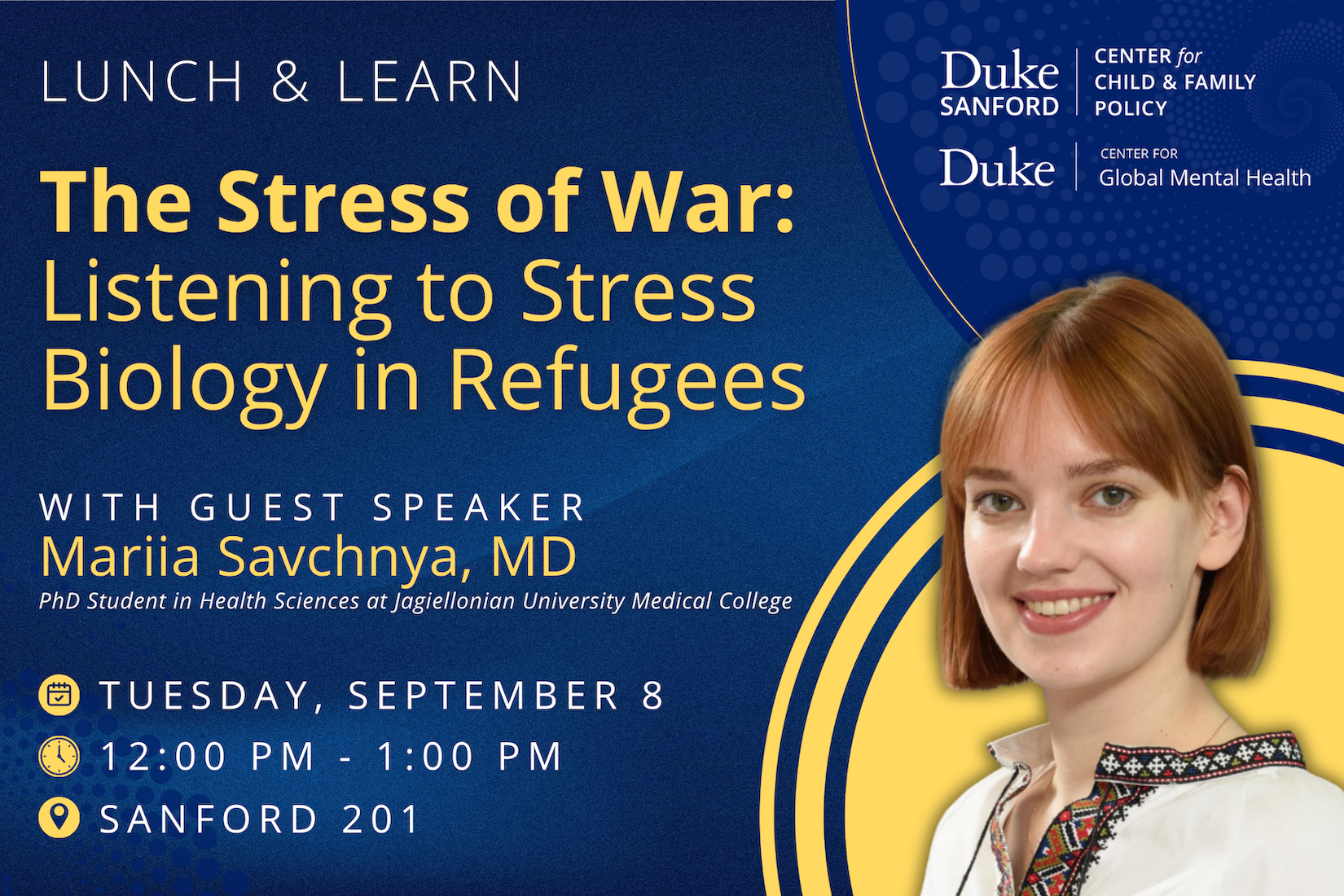


In this talk, Savchnya will share findings from the STRONG study (Stress, Trauma, Resilience Of New Generations), in which her team followed 141 Ukrainian refugee women - mothers and grandmothers who arrived in Kraków after February 2022 - measuring hair cortisol concentration as a biomarker of HPA (hypothalamic-pituitary-adrenal) axis activity alongside self-reported perceived stress and psychological resilience.
Women who escaped from frontline towns in Ukraine had 18% higher hair cortisol than those from non-frontline regions, yet the two groups did not differ in perceived stress; and the size of the cortisol gap depended on resilience: it was largest among women with low resilience and disappeared at high resilience. Savchnya will use this as a starting point to talk about what biomarkers can add to refugee health research, and future directions of her work, including other biomarkers, health systems perspective on refugees from Ukraine in Poland, and a One Health project in preparation.
The talk will allow time for discussion and feedback about how stress is measured in war-affected families, and what that might mean for the how war-affected families are supported.
Mariia Savchnya completed her medical education in Kyiv, Ukraine (Bogomolets National Medical University) before moving to Poland for her PhD in Health Sciences at Jagiellonian University Medical College. Her main research focuses on refugee health, with focus on biomarkers, such as cortisol and telomere length. She is also a research assistant in a project focusing on health systems barriers and facilitators for Ukrainian refugees in Poland.
Research projects: STRONG study Stress, Trauma, Resilience Of New Generations (PI: Grazyna Jasienska) EDuREF study Investigating the barriers and facilitators to emergency department use among refugees from Ukraine in Poland (PI: Iwona Bielska)